
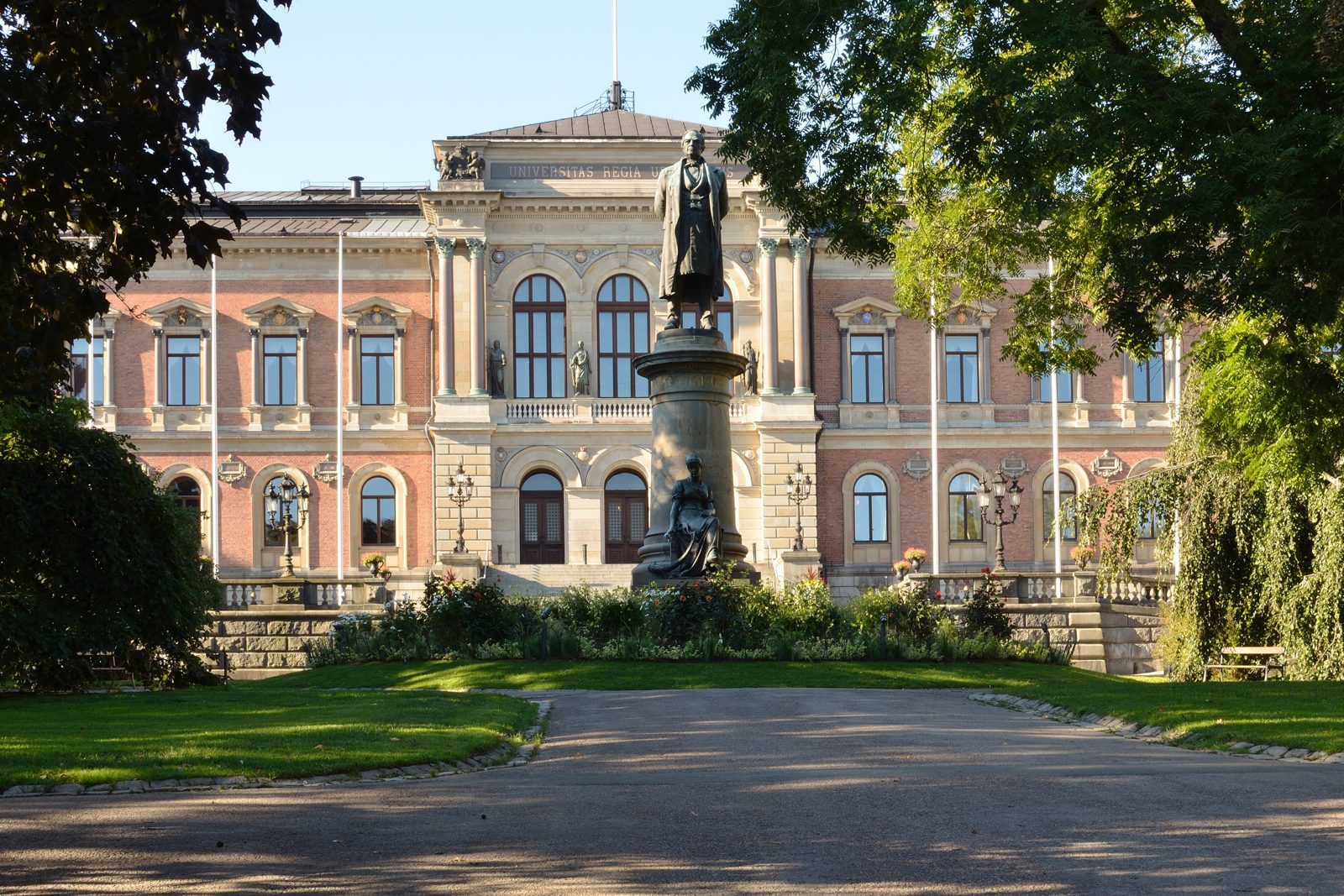
Origins, 2017
The question behind the Institute was first set out in the Director’s 2017 master’s thesis at Uppsala University, “The Sovereignty of Subjectivity: Pursuing a Philosophically Optimal Justification of Claims Affirming the Existence of Universal Human Rights”. The thesis asked on what basis universal human rights can be justified. This thesis is the intellectual origin of the Institute’s current work on peace. On 14 December 2017 the Institute was registered with the Swedish Tax Authority in Stockholm as a non-profit association, under the name the Peace and Conflict Science Institute. Its first Statutes gave it the purpose of developing and promoting a comprehensive standard for defining and measuring peace.
Timeline, The Last Decade
- 2017
The Institute was registered in Stockholm on 14 December as a non-profit association (ideell förening).
- 2018
The Institute led “Peace at School”, a series of anti-bullying workshops, using an early prototype of its SoS peace theory. From 26 October to 14 December, children aged 7 to 13 in Fracción Milpillas, San Luis Potosí, Mexico, were taught how to confront violence in the classroom using non-violent techniques. The series was coordinated by the Organización para Restaurar el Medio Ambiente y la Armonía Social (ORMA), with Ensamblando Vidas and the Colegio Internacional Terranova.
- 2020
On 12 March the Institute delivered a workshop for the OMNI Center for Peace, Justice and Ecology in Fayetteville, Arkansas, United States.
- 2023
In May the Director’s article “Reframing the Ontology of Peace Studies” was published in Peace and Conflict Studies, volume 29, issue 2, in open access. On 24 June the Director gave an invited presentation, “Peace Reimagined: Embracing Sentience in Peace Studies”, at the workshop “Ontology of Peace: Reflections on Pluriversality”, organized by the Jindal Institute of Behavioural Sciences at O.P. Jindal Global University, India.
- 2025
By January the Institute held special consultative status with the United Nations. Its written statement A/HRC/58/NGO/136 was issued for the fifty-eighth session of the Human Rights Council. On 24 March it organized and moderated a side event at that session, “The Future of Peace: Defining a Foundation for Global Peacecraft”, in Room XXV of the Palais des Nations. In the summer the first Research Trainee joined the Institute. In July a statement by the Institute was issued for the High-level Segment of the Economic and Social Council (E/C.2/2025/CRP.48), and in August a statement for the sixtieth session of the Human Rights Council (A/HRC/60/NGO/307). At an extraordinary Members’ Assembly on 3 October the members adopted the name Institute for Global Peacecraft, which the Swedish Tax Agency registered on 22 October. In October the Director presented a paper, “When Peace Fails Definition: Typologies Under Scientific Scrutiny”, at the conference of Concerned Philosophers for Peace. On 7 November he was an invited presenter at the workshop “Peace in International Law: Myth, Reality, or Legal Obligation?”, organized by the Faculty of Law of the University of Geneva.
- 2026
On 21 March the Director took part in a working-group workshop at the annual convention of the International Studies Association in Cleveland, United States. From May, a cohort of ten Research Trainees coded sources for the Institute’s systematic review of 61 concepts of peace, and a second cohort of eight began in September. On 8 October the Journal on the Use of Force and International Law published the article “The Sovereignty of Sentience: A Phenomenological Approach to Peace for International Law”, part of a forthcoming special issue on peace in international law. In October the Institute published its first commentary, “What would it take for law to be built for peace?”.